
Best 7-Seater Family SUVs in Saudi Arabia Under SAR 150,000 (2026)
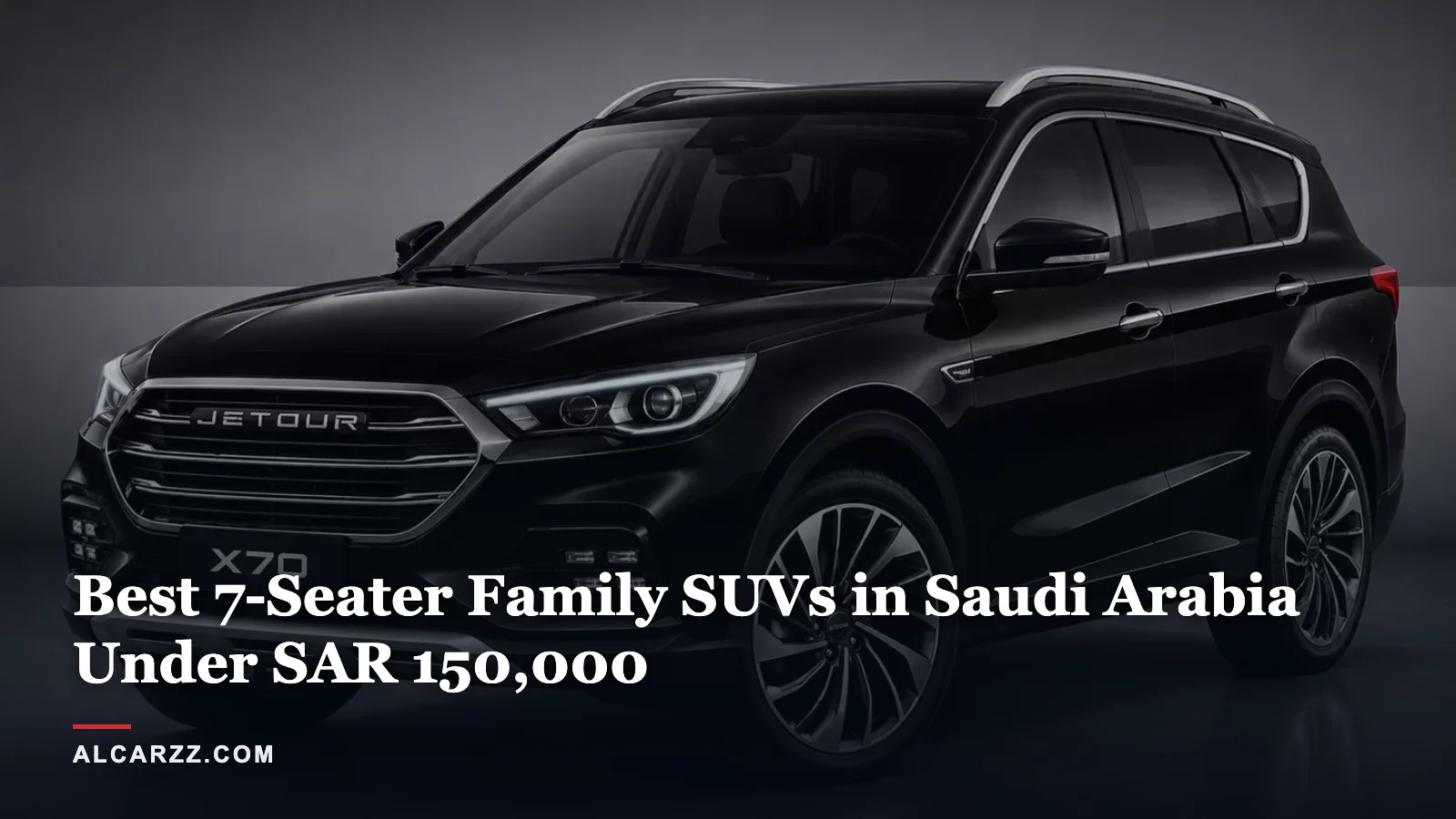

In Saudi Arabia, a seven-seat SUV is not a luxury purchase — it is household infrastructure. Large families, long inter-city drives between Riyadh, Jeddah and Dammam, and the practical reality of extended-family travel make the third row a requirement rather than a nice-to-have. The good news for 2026: a genuinely usable seven-seater no longer demands SAR 200,000. This guide maps what SAR 150,000 actually buys, and where the compromises are hidden.
Key takeaways
- Saudi new-car pricing has softened, with reports of 10–15% reductions on selected models versus previous years — the SAR 150,000 ceiling stretches further in 2026 than it did in 2024.
- Toyota remains the volume leader with roughly a quarter of the Saudi market, and Hyundai and Kia together account for a comparable share. That matters for parts and resale, not just badge appeal.
- The most affordable true seven-seaters — including the Jetour X70 and Suzuki Ertiga — sit well under SAR 100,000, leaving budget for a better trim or a longer warranty.
- Critical distinction: a seven-seat crossover and a seven-seat ladder-frame SUV are different tools. Only one of them is built for regular Hejaz mountain runs with a full load.
- Zero-down-payment and extended-financing offers are widespread. They lower the monthly figure, not the total cost.
What this guide covers
- The Saudi market in 2026: what changed
- The shortlist under SAR 150,000
- Third row reality: which ones fit adults
- Crossover or ladder frame?
- Running costs and resale in KSA
- Pros and cons by category
- Buying advice for Saudi buyers
- Expert verdict
- FAQ
The Saudi market in 2026: what changed
Two forces reshaped the mid-budget SUV segment in Saudi Arabia. The first is pricing pressure: analysts tracking the Saudi market have reported reductions in the region of 10–15% on selected vehicles compared with earlier years, driven partly by aggressive Chinese-brand entry and partly by well-stocked dealer inventories.
The second is the arrival of credible seven-seat product at price points that previously bought a five-seat compact crossover. Where a Saudi family once had to choose between three rows and decent equipment, several 2026 models now offer both.
The competitive backdrop still favours the incumbents. Toyota holds roughly 28% of the Saudi market, with Hyundai and Kia together in the low twenties. Those numbers translate directly into dealer density outside the major cities, parts availability, and the used-market liquidity that determines what you get back in four years. If you are buying your first car in the Kingdom, start with our complete guide to buying a new car in Saudi Arabia.
The shortlist under SAR 150,000
| Model | Type | Indicative KSA price (SAR) | Third row verdict | Best for |
|---|---|---|---|---|
| Jetour X70 | Unibody crossover | From ~74,000 | Occasional / children | Maximum seats per riyal |
| Suzuki Ertiga | Compact MPV | From ~72,000 | Genuinely usable, tight boot | City families, low running costs |
| Nissan X-Trail | Unibody crossover | Mid range | Occasional use | Balanced all-rounder |
| Kia Sorento | Unibody crossover | Upper range | Usable for teens | Equipment and warranty |
| Hyundai Santa Fe | Unibody crossover | Upper range | Usable for teens | Comfort and refinement |
| Toyota Fortuner | Ladder frame | Upper range / above | Occasional, high floor | Durability and rough roads |
| Ford Territory | Unibody crossover | Mid range | Model dependent | Features for the money |
Prices are indicative and move with dealer campaigns, model year and specification. Verify live figures with an authorised dealer before committing. Browse current listings under new cars and live promotions on our offers page.
Two names deserve special mention. The Jetour X70 has become the reference point for value seven-seating in the Kingdom, undercutting almost everything with a genuine third row. The Suzuki Ertiga takes the opposite approach — it is an MPV rather than an SUV, which means a lower floor, easier third-row access and better fuel economy, at the cost of ground clearance and road presence.
Above roughly SAR 150,000 the segment opens up considerably: the Hyundai Palisade has been quoted near SAR 188,000 in the Kingdom, which places it clearly outside this budget but explains what the extra money buys — a third row adults can genuinely occupy for hours.
Third row reality: which ones fit adults
This is where most buying guides are dishonest. "Seven seats" is a specification, not a promise. Before you sign, apply three tests in the showroom:
- The access test. Can a child climb into row three unaided, with row two occupied? On several crossovers the answer is no.
- The boot test. With all seven seats up, how much luggage space remains? On many compact seven-seaters the answer is close to none — which makes the third row useless for the airport runs you bought it for.
- The knee test. Sit in row three yourself with row two set for an adult. If your knees are against the seatback, that row is for short journeys only.
Broadly: MPV-based vehicles like the Ertiga do third-row access and space better than their price suggests. Crossover-based seven-seaters trade third-row usability for ground clearance and styling. Ladder-frame options like the Fortuner have a high floor because of the chassis underneath, which pushes third-row passengers into a knees-up seating position.
Families who genuinely use all seven seats every day should read our companion analysis of seven-seat SUVs for large families, which covers the packaging trade-offs in more depth.
Crossover or ladder frame?
| Consideration | Unibody crossover | Ladder-frame SUV |
|---|---|---|
| Ride comfort on tarmac | Better | Firmer, more movement |
| Fuel economy | Better | Worse |
| Third-row floor height | Lower, more usable | Higher, knees-up |
| Rough road and desert durability | Adequate | Stronger |
| Towing | Limited | Stronger |
| Resale in KSA | Model dependent | Traditionally strong |
The honest answer for most Saudi families is a crossover. Unless you regularly tow, drive unpaved routes, or load the vehicle to its limit on long desert stretches, ladder-frame construction costs you comfort and fuel for capability you will rarely use. The SUV versus sedan analysis applies the same logic one step further back.
Running costs and resale in KSA
Fuel in Saudi Arabia is inexpensive by global standards but no longer trivial, and a seven-seater carries weight you pay for on every journey. Three cost lines deserve attention before purchase:
- Insurance. Larger vehicles and higher values raise premiums. Get quotes before you buy, not after.
- Servicing. Check the interval and the price of a major service. Chinese brands often bundle free servicing for a period — confirm what happens when that ends.
- Depreciation. This is the largest cost of ownership and the one buyers ignore. Toyota and, increasingly, Hyundai and Kia hold value better in the Kingdom than newer entrants.
That last point deserves emphasis for anyone cross-shopping a Chinese seven-seater against a Japanese or Korean one. The purchase saving is real and often substantial. Whether it survives four years of depreciation depends on how long you keep the car. Buy for eight years and the saving is yours; sell at three and much of it transfers to the next owner. Our guide to the most reliable cars in the GCC after 100,000 km is the right lens for a long-hold decision.
Pros and cons by category
Budget Chinese seven-seaters (Jetour X70 and similar)
Pros: unbeatable seats-per-riyal, generous equipment, long warranties, genuinely modern interiors.
Cons: faster depreciation, thinner service network outside major cities, shorter track record on long-term durability.
Japanese and Korean crossovers (X-Trail, Sorento, Santa Fe)
Pros: proven reliability, dense dealer coverage, strong resale, refined on long drives.
Cons: you pay for that reputation; equipment per riyal trails the newcomers.
Ladder-frame (Fortuner)
Pros: durability, towing, unmatched resale confidence in the region.
Cons: firmer ride, thirstier, compromised third row.
Buying advice for Saudi buyers
- Decide your holding period first. It determines whether a value brand or an established one is the rational buy. Nothing else in this decision matters as much.
- Do the three showroom tests on the third row before discussing price.
- Separate the monthly payment from the total cost. Zero-down offers and stretched terms flatter the monthly figure while increasing what you pay overall. Model it properly on our EMI calculator.
- Ask whether the warranty is transferable — this materially affects resale.
- Check service coverage in your city, not just nationally. This is where newer brands are weakest.
- Compare like for like using our comparison tool rather than trusting trim names, which mean different things across brands.
- Consider a nearly new example. Letting the first owner absorb year-one depreciation is the single most effective way to stretch SAR 150,000 — see our used car buying guide for the inspection checklist.
Expert verdict
For most Saudi families, the smart money in 2026 sits with a Korean or Japanese crossover in the upper half of this budget — a Sorento, Santa Fe or X-Trail — where third-row usability, refinement and resale reach an acceptable balance without stretching past SAR 150,000. That combination is the lowest-regret purchase in the segment.
The value case for the Jetour X70 is nonetheless genuine and should not be dismissed. If you are buying to keep, need seven seats now, and have a dealer within reasonable distance, it delivers space and equipment that nothing else at that price approaches. Just enter with clear eyes about resale rather than discovering it at trade-in.
The Fortuner remains the right answer for a narrower group: families who leave paved roads regularly, tow, or place resale confidence above ride comfort. If that is not you, the ladder frame is a tax you are paying for capability you will not use.
Frequently asked questions
What is the cheapest 7-seater SUV in Saudi Arabia in 2026?
The Jetour X70 and Suzuki Ertiga are among the most affordable genuine seven-seaters, with indicative prices from roughly SAR 72,000–74,000. Confirm current figures with an authorised dealer, as campaign pricing changes frequently.
Can I get a good 7-seater SUV under SAR 150,000?
Yes. The budget covers a wide range, from entry seven-seaters near SAR 75,000 to well-equipped Korean and Japanese crossovers in the SAR 120,000–150,000 band. The Hyundai Palisade, quoted near SAR 188,000, sits above this ceiling.
Are Chinese 7-seater SUVs reliable in Saudi Arabia?
Build quality and equipment have improved substantially, and warranties are often longer than established rivals offer. The open questions are long-term durability data and service network depth outside major cities — both worth checking for your specific location before buying.
Is a ladder-frame SUV better than a crossover for a family?
Usually not. Ladder-frame construction improves durability and towing but worsens ride comfort, fuel consumption and third-row access. Unless you tow or drive unpaved routes regularly, a crossover is the more sensible family choice.
Which 7-seater holds its value best in Saudi Arabia?
Toyota models traditionally lead on resale in the Kingdom, supported by roughly 28% market share and dense dealer coverage, with Hyundai and Kia also performing solidly. Newer Chinese entrants typically depreciate faster.
Does a 7-seater have boot space with all seats up?
Often very little. Test this specifically in the showroom with the third row raised — on many compact seven-seaters the remaining space will not hold a family's airport luggage, which defeats the purpose of the extra row.