
Buying a New Car in Saudi Arabia (2026): The Complete Guide
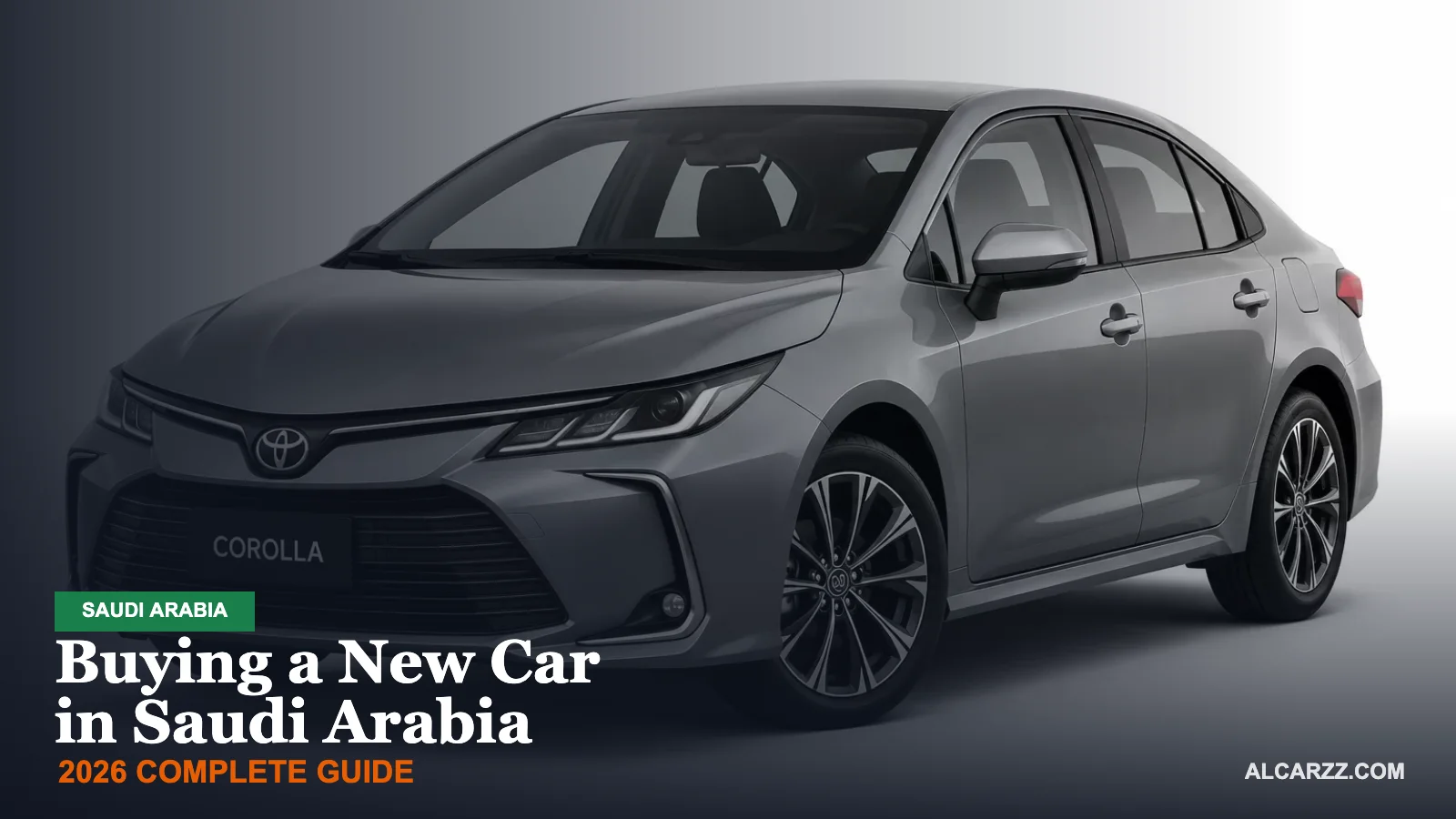

Buying a car in Saudi Arabia is more straightforward than most first-time buyers expect — but the total cost, financing rules and registration steps catch people out. This is the complete, up-to-date walkthrough for 2026, whether you are a Saudi national or an expat on an Iqama.
The true cost: duty, VAT & fees
The sticker price is only part of what you pay. In Saudi Arabia, new cars carry a 5% customs duty and the 15% VAT that applies to most goods and services. Together these are usually built into the dealer’s advertised price, but you should always confirm whether a quote is VAT-inclusive before signing.
One important 2026 incentive: electric vehicles currently qualify for 0% VAT until 2030, which meaningfully narrows the price gap between EVs and petrol cars for Saudi buyers. If you have been on the fence about going electric, the tax position is more favourable than ever — use the ALcarzz EMI calculator to model the monthly difference.
| Cost component | What to expect (2026) |
|---|---|
| Customs duty | 5% (usually included in dealer price) |
| VAT | 15% on petrol/hybrid; 0% on EVs until 2030 |
| Annual registration (Istimara) | SAR 100 for private cars |
| Periodic inspection (Fahes) | Required before registration/renewal |
| Insurance | Third-party minimum; comprehensive usually required if financed |
How to buy a new car in Saudi Arabia, step by step
The modern process is largely digital, handled through the TAM and Absher platforms, and most dealerships manage the paperwork for you:
- Choose your model and trim. Compare options and shortlist on the ALcarzz comparison tool and new cars listings.
- Agree the out-the-door price. Confirm it is VAT-inclusive and ask what is bundled (mats, tint, service pack).
- Arrange finance or pay cash. If financing, get pre-approval from your bank first (see below).
- Buy insurance. Arrange a live policy before the dealer registers the car — it speeds everything up.
- Registration & plates. The dealer processes the Istimara through TAM/Absher; you receive an electronic Istimara PDF and number plates.
- Collect and verify. Check the VIN, service booklet, warranty terms and that the Istimara details match your ID.
Documents you need
- Saudi nationals: National ID.
- Expats: valid Iqama (residence permit) and a passport copy.
- For finance/lease: proof of income and recent bank statements.
- Insurance: a valid policy in your name before registration.
It is best to arrange insurance ahead of your dealership visit so the registration goes through in one sitting.
Financing & down payment
Most buyers finance through a Saudi bank or the dealer’s finance partner. You will typically need to show income and bank records, and lenders offer two broad structures:
- Islamic (Sharia-compliant) finance — commonly Murabaha, where the bank buys the car and resells it to you at a fixed profit, so there is no conventional interest.
- Conventional finance — a standard auto loan with an interest rate.
Watch the difference between a flat rate and a reducing-balance rate — a flat rate that looks low can cost more than a slightly higher reducing rate. Always compare the total amount payable, not just the headline percentage, and model your instalment on the EMI calculator before you commit.
Insurance rules
Third-party liability insurance is the legal minimum, but comprehensive cover is generally mandatory if the car is financed or leased, because the lender needs the asset protected. Comprehensive also makes sense given Saudi Arabia’s long highway distances and summer heat. Get quotes from two or three insurers before you buy — premiums vary widely by model, age and city.
Registration (Istimara)
The Istimara is your vehicle registration document (the vehicle licence). For private cars the annual fee is SAR 100, and it is now issued electronically as a downloadable PDF. For renewals, three things must be valid or Absher will reject the request:
- A current Fahes (periodic technical inspection),
- Live motor insurance, and
- No unpaid traffic fines.
Keep these three current and renewal takes minutes online through Absher.
Popular new cars in Saudi Arabia (2026)
Saudi buyers reward durability, resale strength and service-network depth — which is why Toyota dominates. Perennial best-sellers include the Toyota Land Cruiser and Hilux, the Camry and Corolla for sedans, and a fast-rising wave of value-packed Chinese SUVs. For a family, cross-shop a RAV4-class compact SUV; for highway and desert use, a full-size body-on-frame SUV remains the Saudi default.
Expert buying tips
- Negotiate the total, not the monthly. Dealers flex the instalment by stretching the term — always check the total payable.
- Confirm VAT-inclusive pricing in writing before you sign.
- Buy at quarter-end when dealers chase targets — check current offers.
- Factor resale. High-resale models cost less to own even at a higher purchase price.
- Read the warranty and service-package terms before committing.
Frequently asked questions
How much tax do you pay on a new car in Saudi Arabia?
New cars carry a 5% customs duty plus 15% VAT, usually built into the dealer price. Electric vehicles qualify for 0% VAT until 2030.
Can expats buy a new car in Saudi Arabia?
Yes. Expats need a valid Iqama and a passport copy, and for financing, proof of income and bank statements. The dealer handles registration through TAM/Absher.
How much is car registration (Istimara) in Saudi Arabia?
The annual registration fee for a private car is SAR 100, issued electronically. Renewal requires a valid Fahes inspection, active insurance and no unpaid fines.
Is car insurance mandatory when buying a car in Saudi Arabia?
Third-party insurance is the legal minimum, and comprehensive cover is generally required if the car is financed or leased.
What is the difference between Islamic and conventional car finance?
Islamic finance (commonly Murabaha) has the bank buy and resell the car at a fixed profit with no conventional interest, while conventional finance is a standard interest-based auto loan. Compare the total amount payable on both.